A digital product description template buyers can check
Write clear digital product descriptions with requirements, duration, delivery and support. Includes a copyable template and a fictional before/after example.
Keep selling by hand, run your own Telegram bot or use a platform? A four-step worksheet on current fit, responsibility, product type and payment rules.
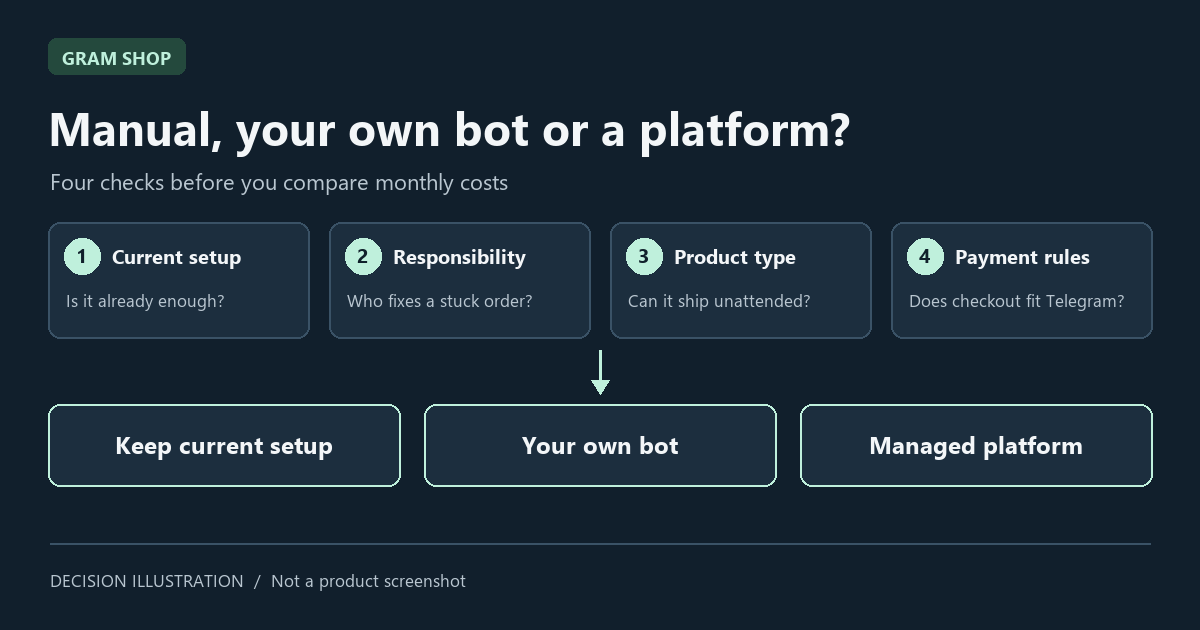
Should you keep selling by hand, run your own Telegram bot or use a managed platform? Answer four questions before comparing prices: does the current setup already work, who fixes it when an order stops, can your product be delivered without a person, and does the payment flow fit Telegram's rules? This worksheet takes you through those checks in order.
It is written for owners selling license keys, accounts or access they are authorized to distribute. Order references below are synthetic.
Start with the option most comparisons leave out: keeping what you have. Review two weeks of orders, including a busy day. For each order that waited, write down where it stopped and who resolved it.
| Question | A "yes" suggests |
|---|---|
| Do buyers usually get their product within the time you publish? | Delivery speed is not your main problem |
| Can someone else take over a pending order when you are away? | Your process does not depend on one person |
| Can you trace any order from payment to the key that was sent? | Your records already answer support questions |
| Have you avoided sending one key twice or accepting a screenshot as payment? | Your current checks are holding |
If you answer yes to all four, keep your setup and fix the specific friction you found. Some sellers report that delivery is already solved and that finding buyers is harder. A new ordering tool will not bring visitors.
Each option moves work to a different person. Compare the responsibilities before you compare monthly costs.
| Responsibility | Manual sales | Your own bot | Managed platform |
|---|---|---|---|
| Confirm a payment | You or staff, by hand | Your code or a payment provider you integrate | The platform, from provider evidence it supports |
| Keep stock and send the key | A spreadsheet and copy-paste | Your code and database | The platform's inventory and delivery flow |
| Server, updates and backups | None | You or a contractor you pay | The platform |
| An order that fails at night | Waits for you | Waits for whoever maintains the bot | Recorded for review; your team still handles the buyer |
| Changing direction later | Move your spreadsheet | Keep or hand over the code | Ask how you take your bot and records with you |
Buying bot source code and paying someone to install it are separate from operating it. Before choosing your own bot, name the person who updates it, restores it from backup and answers when it stops at night.
Automatic delivery fits products prepared before the sale: one unique key or account per order, from stock you may distribute. A downloadable file is shared by many buyers and needs a different setup. A product made to order, such as a custom design, still needs someone to make it after payment.
List your products in these three groups. If most of your sales are made to order, a bot can take the order and payment details, but the delivery step stays with your team.
Telegram's digital-goods payment documentation requires Telegram Stars for digital goods and services sold through bots and mini apps inside Telegram. It also makes the bot owner responsible for payment disputes and timely support. This applies whether you write the bot or rent it.
Read the current rules for your products and payment methods before you commit to any option. A bot that displays payment instructions does not show that Telegram allows that method for your product.
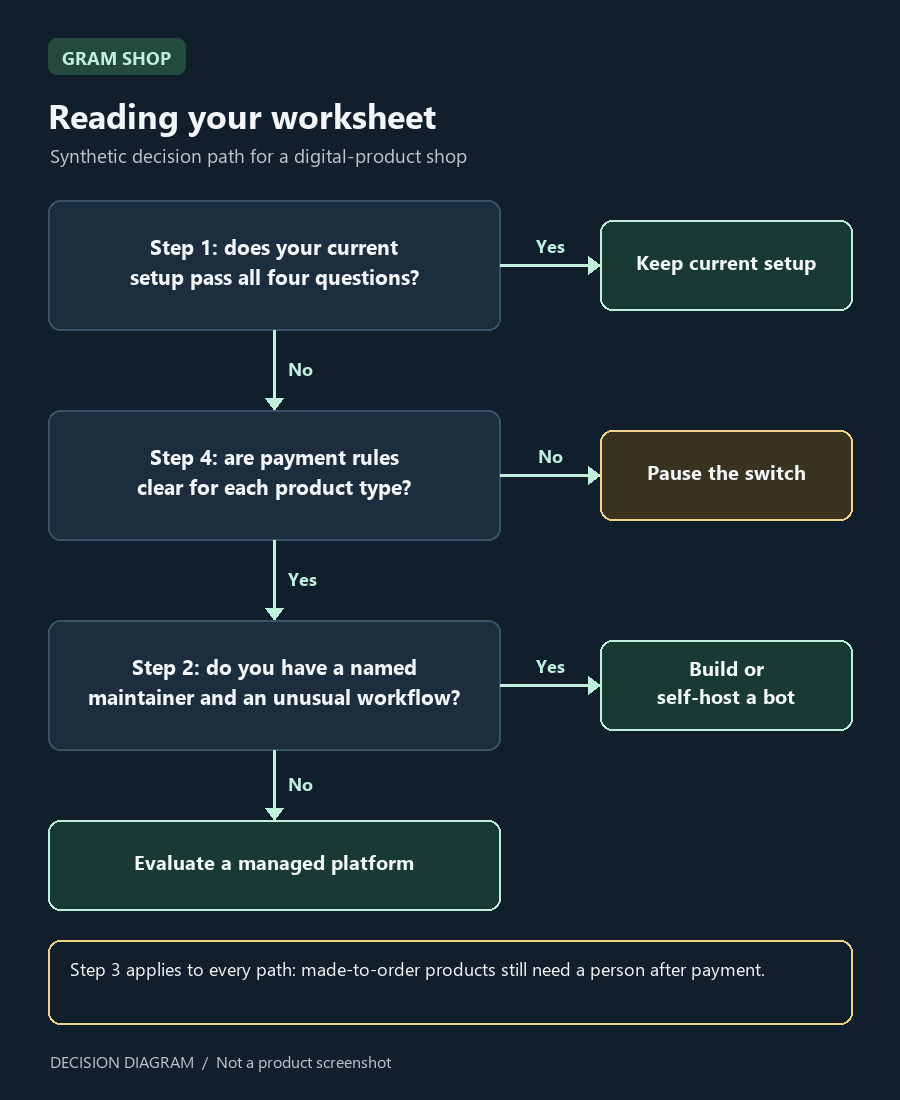
| Your answers | Direction | Ask for this before switching |
|---|---|---|
| Step 1 all yes | Keep the current setup | A handover note so a second person can resolve pending orders |
| Unusual workflow and a named maintainer | Build or self-host a bot | Deployment, backup and restore steps, plus an on-call contact |
| Standard key sales and no maintainer | Evaluate a managed platform | A demo of a failed delivery, the support scope and how you leave |
| Payment rules unresolved | Pause the switch | A written answer on the payment method for each product type |
For Gram Shop, part of the answer is in the current code. Each Store connects a bot token created by your Team. Gram Shop checks that the token belongs to a bot and that no other Store already uses it. The token is stored encrypted, and revoking the connection removes the bot's webhook. These points come from implementation and tests, not from live operating results.
To discuss fit, send us your completed worksheet: your product types, the step where orders wait and who maintains your setup today. Controlled Beta access requests are reviewed individually.
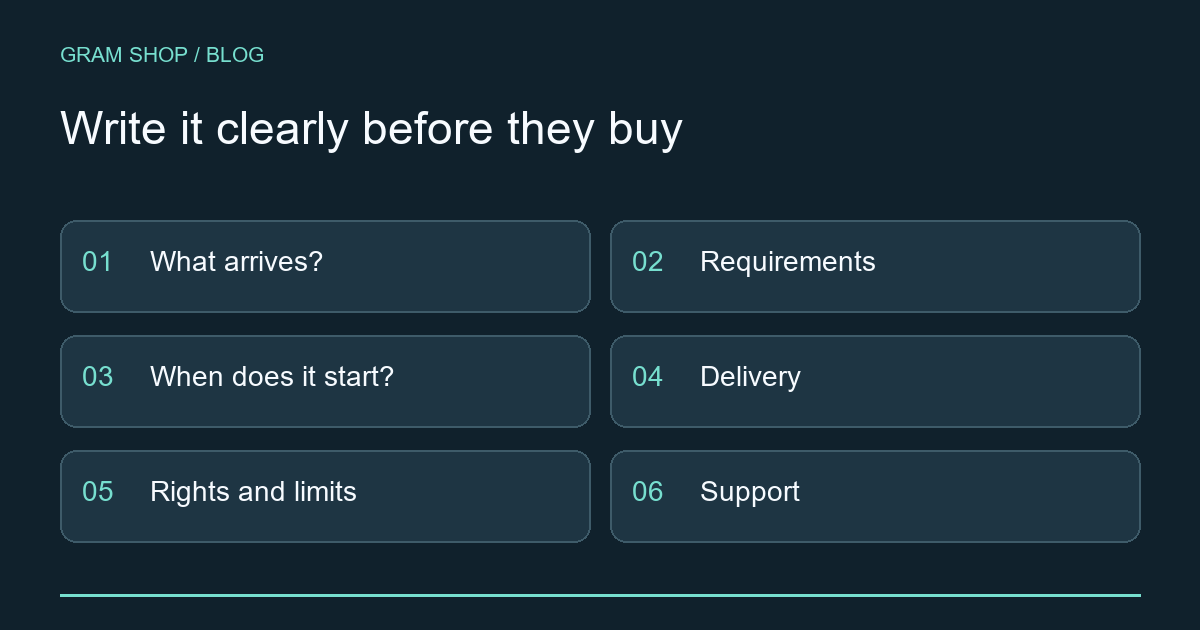
Write clear digital product descriptions with requirements, duration, delivery and support. Includes a copyable template and a fictional before/after example.
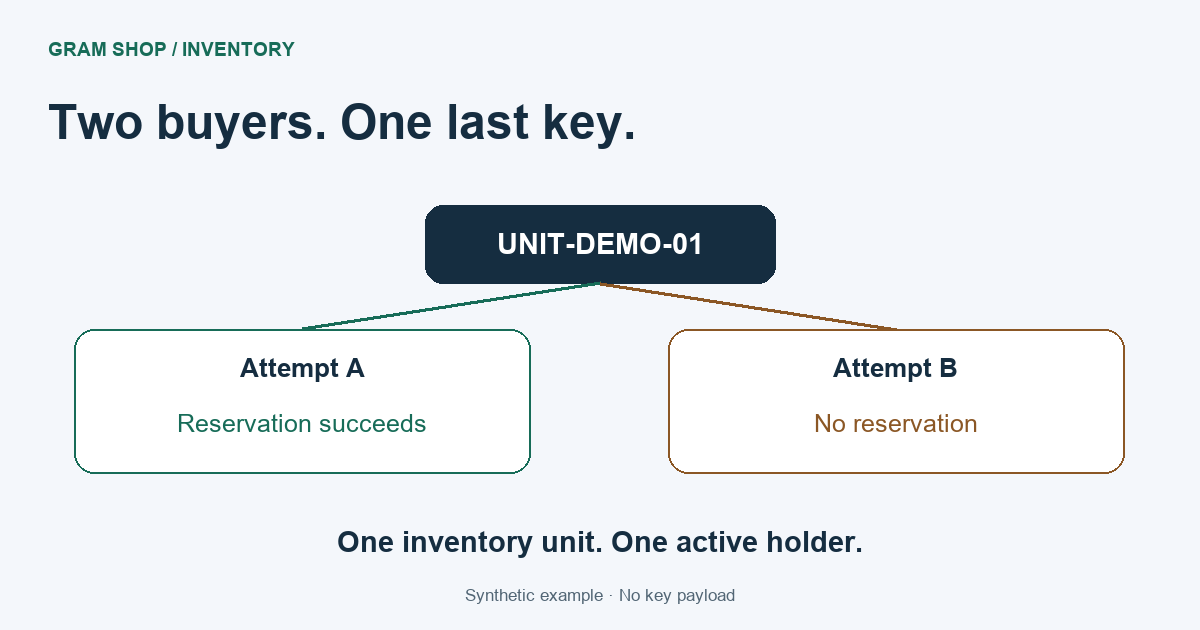
Avoid selling the last key twice. Trace two synthetic purchase attempts through stock display, reservation and sale, with an operator evidence checklist.
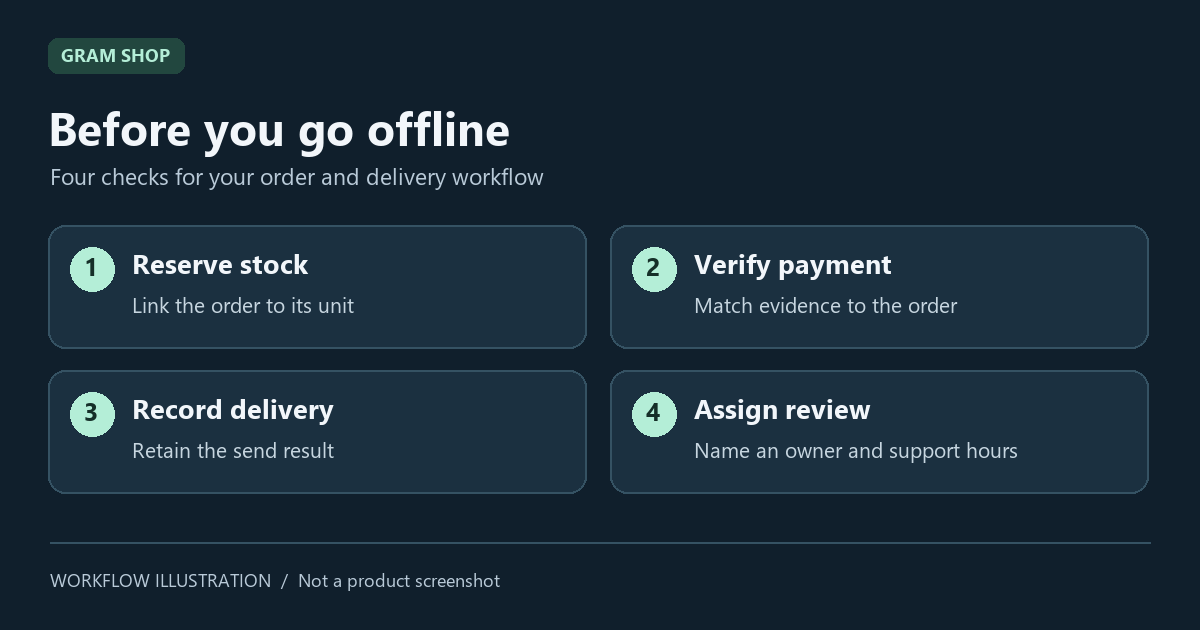
Check stock, payment evidence, key delivery and support hours before going offline. A practical workflow checklist for Telegram digital-product shop owners.
Gram Shop is in Controlled Beta. Tell us about your Stores and payment rails and we will set up your Team.