A digital product description template buyers can check
Write clear digital product descriptions with requirements, duration, delivery and support. Includes a copyable template and a fictional before/after example.
Avoid selling the last key twice. Trace two synthetic purchase attempts through stock display, reservation and sale, with an operator evidence checklist.
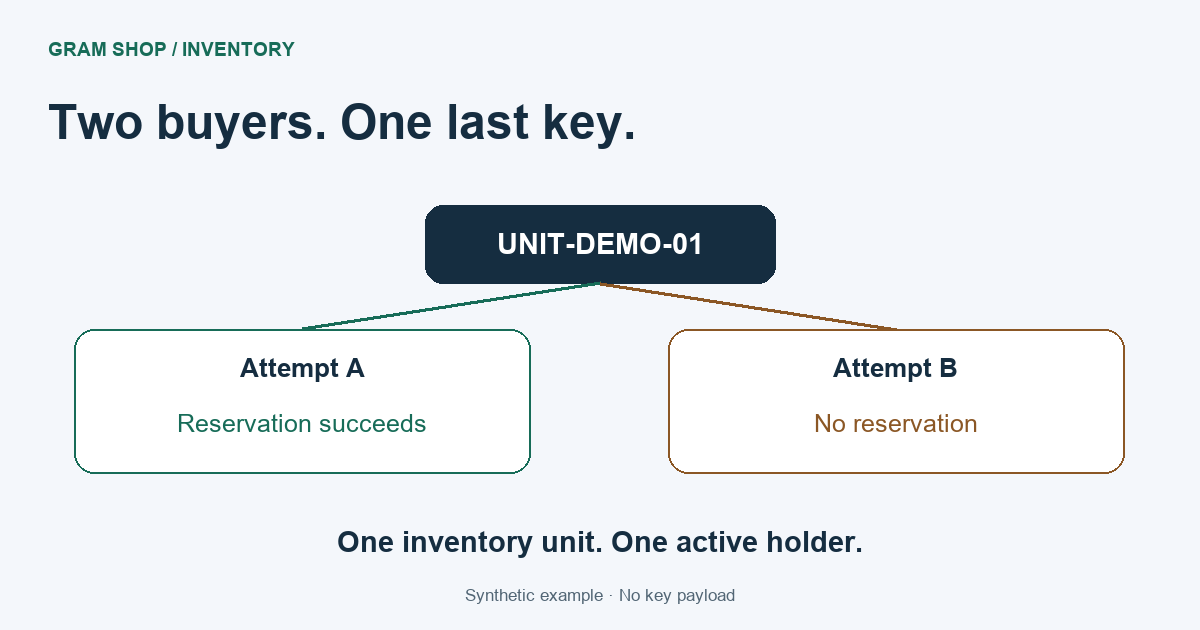
One key remains, but two buyers see it in stock. To avoid selling that last key twice, the reservation step must associate the inventory unit with one purchase attempt. The other attempt needs a clear result before the shop promises delivery.
This guide follows two synthetic purchase attempts so you can inspect your own stock workflow. UNIT-DEMO-01 is an inventory label, not a key payload. The example concerns license keys the shop is authorized to distribute.
Buyers A and B open the catalog at almost the same time. Both see one unit remaining from before a reservation succeeds. When a buyer confirms, the system needs to recheck availability and reserve the unit as one operation.
If a tool reads a count and reduces it in a separate step, both attempts can choose the last key. Ask to inspect the reservation and its order association. A final stock count alone cannot establish whether two orders received the same unit.
Assume A successfully reserves the unit. A labels the winner in this example; opening the catalog first does not establish who will reserve it first.
| Step | Attempt A | Attempt B | UNIT-DEMO-01 |
|---|---|---|---|
| Both view the product | Sees one unit | Sees one unit | available |
| A reserves successfully | Has a reservation for A | Must recheck when claiming stock | reserved for A |
| B has no reservation | Continues according to A's order state | Cannot receive the same unit; gets appropriate guidance | Still reserved for A |
| A meets settlement conditions | Order is associated with the sold unit | Has no entitlement to A's key | sold |
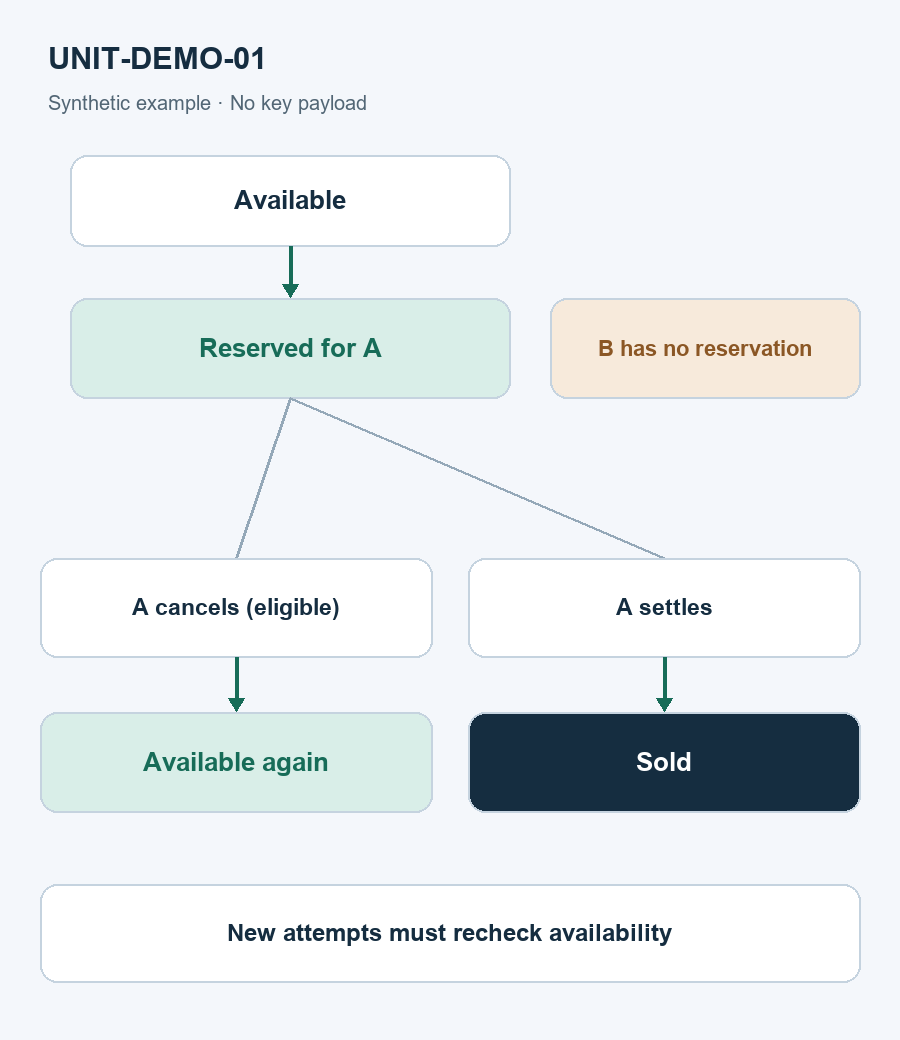
This is an illustration of the required outcome. An attempt unable to acquire a processing lock may need a retry. A later check after reservation may find no stock. A generic response must not be mistaken for a successful order.
The message below is suggested wording to adapt to the actual state, rather than a Gram Shop interface capture:
This purchase attempt has not reserved stock. Refresh the product status before continuing. If you already have an order reference, send it to the shop for review.
An eligible cancellation while awaiting payment can release the held unit. Check the release result and current stock state before accepting another order. A countdown reaching zero does not establish that expiry processing has finished.
Gram Shop's eligible cancellation path releases held units; eligible expiry processing also uses that cancellation path. This does not automatically transfer the unit to B. B needs another availability check through the current purchase flow.
If A's order has settled and the unit is sold, review allocation and delivery history. Gram Shop's current state machine has no transition from sold stock back to available. A refund or dispute should not prompt someone to put a disclosed key back into stock.
A buyer may press confirm again while waiting for a response. Repeat the same purchase action during evaluation and inspect the returned order reference. The order and allocated stock association should remain the same.
Gram Shop's confirmation implementation returns the existing order when the same quote already has one. This describes code behavior. It does not replace a two-buyer contention check on the database engine intended for operation.
Use a test environment and synthetic data. Ask the operator to create two independent attempts for one remaining unit. Record the following references while keeping the actual key in protected storage.
| Evidence to record | What to reconcile |
|---|---|
| Unit and purchase references | One unit; two independent attempts for the same Store and product |
| Active reservations | Only one attempt may hold UNIT-DEMO-01 at a time |
| The unsuccessful attempt | A clear result without association to the same unit |
| Repeated confirmation by the winner | The same order, without another stock allocation |
| Eligible cancellation before settlement | The hold is released; a new attempt rechecks availability |
| Settlement and sending | The sold-unit association and delivery result can be checked separately |
Sequential clicks help check the normal workflow. Demonstrating concurrency requires overlapping operations on an appropriate database engine. A two-window video or a SQLite run alone does not establish MySQL or MariaDB row-lock behavior.
Review the Gram Shop feature scope before evaluating fit. To discuss your stock workflow, send how your shop reserves its last key. Describe when the hold starts, what releases it and what the other buyer sees. Use synthetic references for the example.
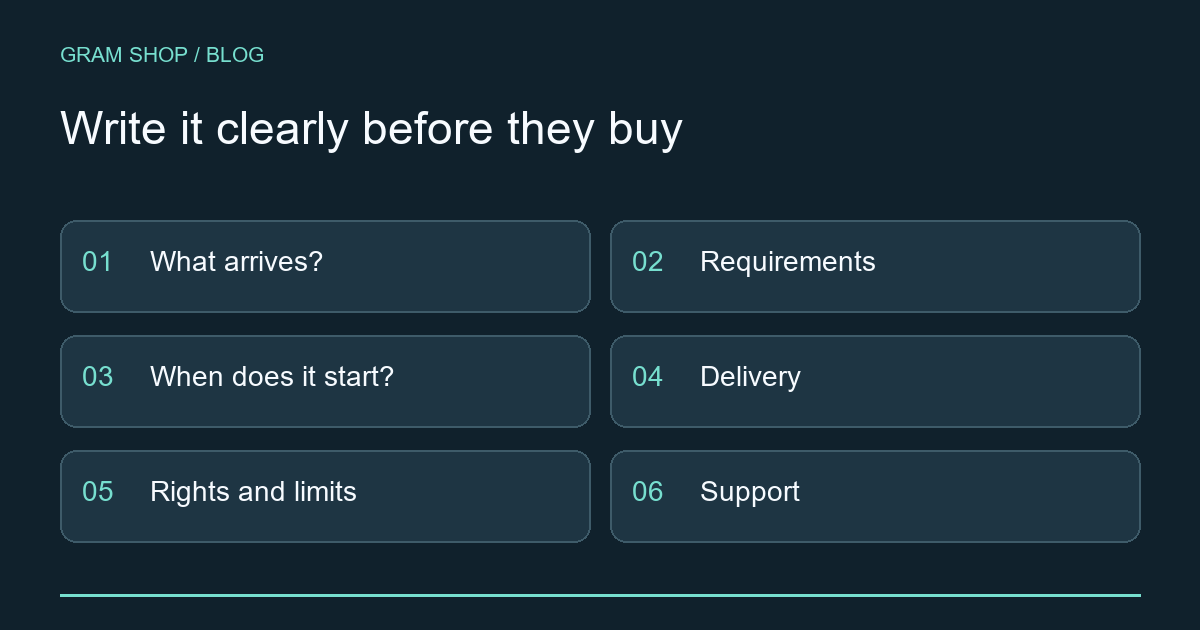
Write clear digital product descriptions with requirements, duration, delivery and support. Includes a copyable template and a fictional before/after example.
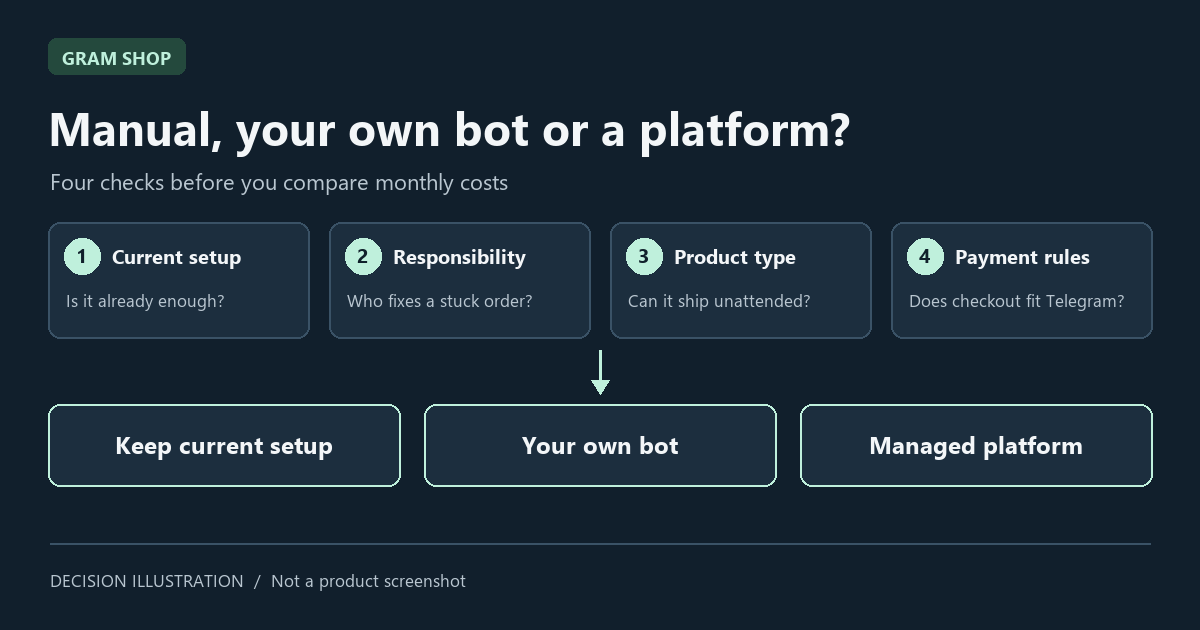
Keep selling by hand, run your own Telegram bot or use a platform? A four-step worksheet on current fit, responsibility, product type and payment rules.
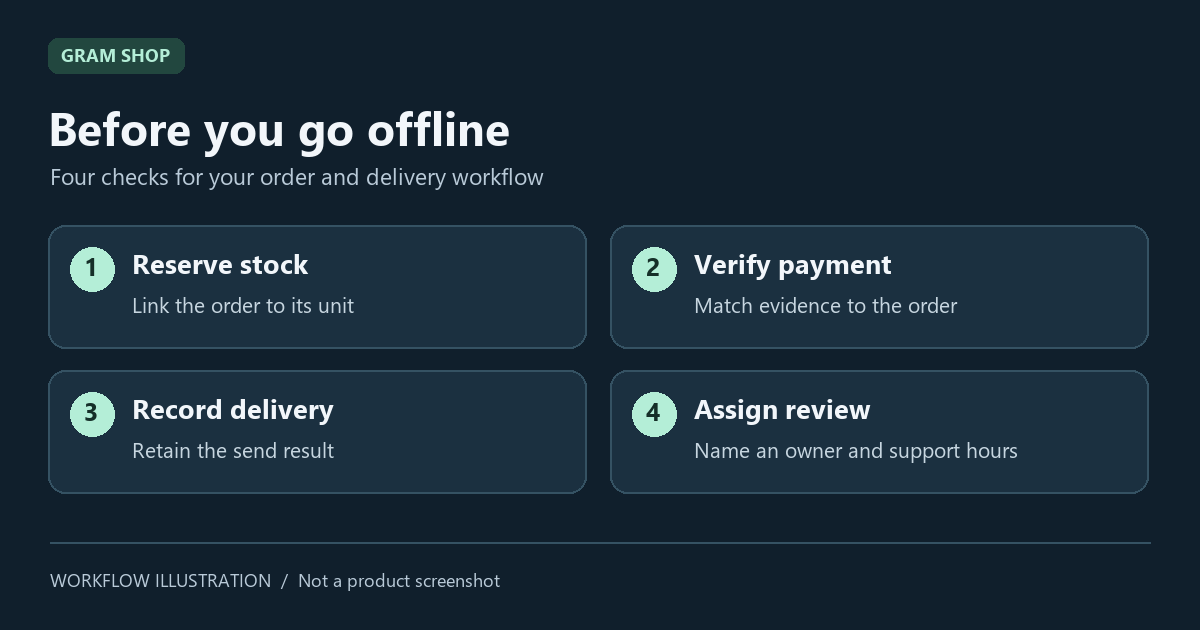
Check stock, payment evidence, key delivery and support hours before going offline. A practical workflow checklist for Telegram digital-product shop owners.
Gram Shop is in Controlled Beta. Tell us about your Stores and payment rails and we will set up your Team.